Please note: We will be closed on Monday, September 7th in observance of the Labor Day holiday.

×
Branch: 11061 Tukwila International Blvd, Tukwila
0 $0.00
items in your cartto quote To cart
Ooops no items were found.
Try something else.
Ok
Loading…
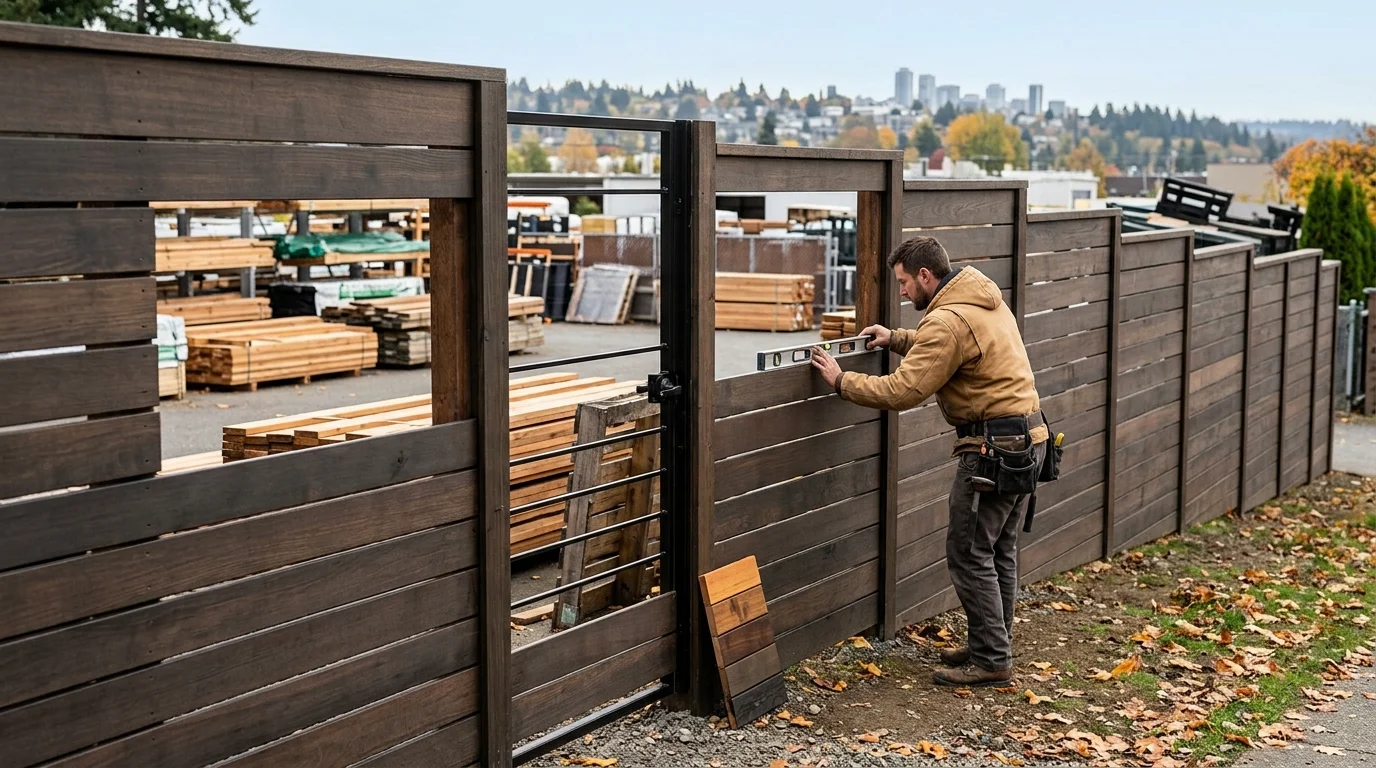
A carpenter uses a spirit level to align dark wooden planks on Horizontal Cedar Fences.

Horizontal Cedar Fences Are Having a Moment

Cedar trends, what's kept our shelves stocked this fall, and a five-minute hardware check worth doing before you close out a job.

Every fall, we like to share what we're seeing across the fencing industry — what's trending with homeowners, what's happening with materials and supply, and a practical tip or two for anyone still finishing up jobs before winter. Here's this season's roundup.

Horizontal wood fences are quietly taking over

Vertical dog-eared boards are losing ground to clean, stacked horizontal runs. Homeowners like the modern look, and it tends to suit smaller yards especially well. It also pairs nicely with darker, richer stain tones — espresso, walnut, charcoal — which are having a moment of their own over the classic honey cedar look.

The best part for installers: it's built from the same cedar boards as a standard privacy fence. Nothing changes about what you're ordering — just how it's run. If you're quoting a privacy fence this fall, it's worth having a horizontal, dark-stained sample on hand to show a client. It's an easy way to offer a modern upgrade without changing your supply order at all.

More manufacturers are building up domestic capacity — and it shows on our shelves

A growing number of fencing material manufacturers have been investing in US-based production — new milling capacity, expanded rolling lines for metal products, and more regional distribution centers instead of a handful of centralized ones. Several of the larger suppliers have announced plant expansions or new facilities over the past year, specifically to cut down shipping distances and buffer against supply disruptions. For installers, that generally means shorter lead times, more predictable schedules, and materials on the shelf sooner.

We've felt the benefit of that directly. It's a big part of why our yard has stayed consistently stocked on the materials you order most — cedar and pressure-treated boards, rail, and post stock — even during stretches when other suppliers were quoting weeks-long waits. Shorter supply chains mean we can restock faster and keep shelves full instead of leaning on backorders.

It's worth asking your supplier where a given product is actually manufactured. It's becoming a more meaningful question than it used to be, and it's a big reason we've been able to say "yes, it's on the shelf" more often than not.

Field tip: check hardware before you close out a job

Fall's swing between warm afternoons and cold, damp nights is exactly the kind of condensation cycle that gets corrosion started on hinges, screws, and gate hardware — especially anything that isn't stainless or properly coated. It's slow enough that it won't show up as a problem today, but it's often the reason a gate starts sagging or a hinge seizes up by February.

Before you wrap a job for the season, it's worth a quick pass:

  • Snug up any screws that have started to back out
  • Check gate hinges and latches for early rust or binding
  • Swap out any hardware that's clearly the wrong grade for outdoor exposure
  • On chain link, check tension bands and rail ends the same way — loose fittings now tend to work themselves fully loose by spring

It adds maybe five minutes per job, but it's a lot cheaper than a spring callback — and it's the kind of thing a customer notices even if they never mention it. We keep coated and stainless nails and screws on hand year-round if you want to swap in better hardware while you're at it.

Got a job where you're not sure which material makes sense? Get in touch — our team knows the trade-offs and is happy to talk it through. Or use our Fence Material Calculator to plan out exactly what you'll need for your next job.

Everguard Materials — Cedar, Chain Link & Fence Supply — 11061 Tukwila International Blvd, Tukwila, WA 98168

fence material counts made easy

Our fence material calculator is the ultimate tool to help you plan your fence project. You can confidently purchase the amount of materials needed for your fence project without worrying about overbuying or underestimating. Start planning your fence project with ease and precision – try our fence material count calculator today!

More insights

SEARCH ×

Search